From source code to mass movement · 1998–2008
Netscape lost, but its source code survived
On 31 March 1998, Netscape's source code was released and the Mozilla project began. This was more than a final rescue attempt by a losing browser company. Programmers outside Netscape could now study, improve and reuse the code. The new Mozilla Public License established the conditions under which they could do so.
The first years were difficult. Old and new code had to be separated and the browser engine was largely rebuilt. Mozilla 1.0 did not appear until 2002, as a sizeable suite containing a browser, email, newsgroups, chat and a web editor. Technically it was a milestone; to ordinary users it felt less nimble than the dominant Internet Explorer.
Netscape releases browser code and mozilla.org begins.
The open internet suite and new Gecko engine mature.
A small standalone browser appears on 23 September.
An independent foundation takes charge of the project.
The official release arrives on 9 November.
Phoenix cut the suite open again
A group of developers including Dave Hyatt and Blake Ross wanted a browser without the complete Mozilla suite. The experimental program would provide a simple, stable base. Anyone wanting more could add features through extensions. Phoenix 0.1 appeared on 23 September 2002 for Windows and Linux.
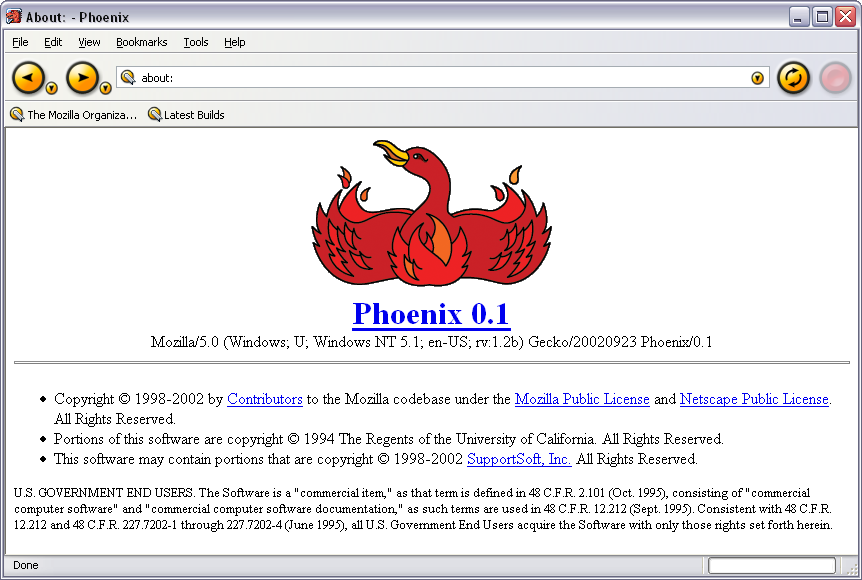
The idea was almost the opposite of the old suite. The browser did not need to contain everything. It primarily had to browse well and leave room for personal choices. This layered approach became the basis of Firefox: a recognisable core surrounded by an ecosystem of themes and add-ons.
Three names for the same promise
The first name was already used by other software. Phoenix became Firebird in 2003, but that name clashed with an existing open-source database project. In February 2004, Mozilla therefore chose Firefox. Its new emblem—a fiery fox around a blue globe—made the browser instantly recognisable.
A browser meant to rise from Netscape's ashes.
An interim name that once again was already in use.
The name that turned an experiment into a consumer product.
Firefox 1.0 made switching easy
Firefox 1.0 was released on 9 November 2004 for Windows, Mac OS X and Linux. It could import bookmarks, passwords, cookies and other information from Internet Explorer. That was essential: an alternative became useful only when people did not have to start again.
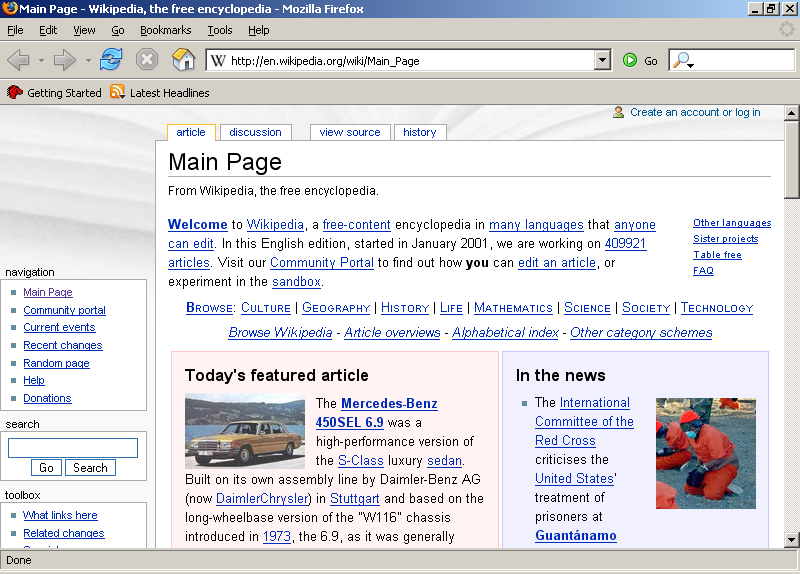
Firefox did not look revolutionary. That was its strength. The address bar, back button and bookmarks were familiar, while tabs kept several pages in one window and the built-in pop-up blocker curbed intrusive advertising. A search box sat permanently beside the address bar. Live Bookmarks brought RSS headlines into the bookmarks menu.
Several pages remained manageable inside one window.
The user decided which new windows could open.
Bookmarks and settings moved across from the old browser.
RSS headlines appeared as a changing list of bookmarks.
The empty browser could become anything
Firefox deliberately kept its core compact. Extensions added exactly what a user missed: blocking advertisements, analysing pages, displaying weather forecasts, managing downloads or organising tabs differently. A theme changed colours and buttons without replacing the browser engine.
Free CSS reconstruction of the extensions window; names illustrate familiar types of add-ons from the period.
This flexibility also brought inconvenience. A browser update could temporarily disable a favourite extension. Too many add-ons made Firefox slower or less stable. The freedom to customise everything meant that each installation gradually became its own, sometimes difficult-to-maintain variant.
An advertisement paid for by users
The launch was carried by the community. Volunteers tested, translated, helped new users and promoted the browser through Spread Firefox. Firefox 1.0 was downloaded ten million times within a month. On 16 December 2004, a two-page advertisement appeared in The New York Times, paid for by thousands of supporters whose names were printed in it.
A browser launch as a shared campaign, not merely a product presentation.
Mozilla reports that Firefox passed one hundred million downloads within a year. Downloads are not market share, but the pace showed that the stagnation after Internet Explorer 6 was ending. A browser was once again something people chose deliberately and recommended to others.
Gecko gave web standards weight again
Underneath the interface was Gecko, Mozilla's open browser engine. Because its code was visible, developers could investigate faults and propose improvements. Websites should work not only in Firefox, but according to shared agreements for HTML, CSS and the Document Object Model. This made Firefox important to the movement that wanted a Web less dependent on features understood only by Internet Explorer.
Open source did not automatically make every decision democratic or every flaw disappear immediately. Like any browser maker, Mozilla had to set priorities, repair security holes and balance usability against freedom. The difference was that its technical foundation remained inspectable and reusable.
Choice returned, but the struggle was not over
Firefox broke the inevitability of Internet Explorer. It did not restore a perfect past: some sites remained browser-specific, updates could break add-ons and a growing program became heavier again. But users and web makers had a credible alternative that was not tied to one operating system.
The victory proved temporary and changed shape. While Firefox restored competition, Apple continued developing Safari and WebKit. In 2008, Google would use Chrome to shift attention towards speed, web applications and its own distribution power. That is where the second browser war begins.