From WebKit to Chromium · 2003–2022
Apple made a fresh start on the Mac
Internet Explorer was still the default browser in Mac OS X at the beginning of 2003. On 7 January, however, Apple presented its own alternative: Safari. It opened with a strikingly sparse toolbar, built-in Google search, pop-up blocking and a new way of organising bookmarks. The first public beta was only a 3 MB download.
Safari did not emerge from nowhere. Apple built upon KHTML and KJS, the open-source code behind the Linux browser Konqueror. Its adapted components became WebCore and JavaScriptCore; together they grew into WebKit. A small KDE project unexpectedly gained descendants on millions of Macs and, from 2007, on the iPhone.
Konqueror renders the Web on Linux.
Apple builds upon KHTML and KJS.
WebKit gains a recognisable Apple browser.
Google combines WebKit with V8.
Chromium forks its engine from WebKit.
A face became an examination
The Acid2 test of 2005 looked like a simple yellow face. Behind the smile were difficult trials involving HTML and CSS. A browser that interpreted the rules incorrectly produced a visibly distorted portrait. The test made differences between browser engines understandable without a technical manual.
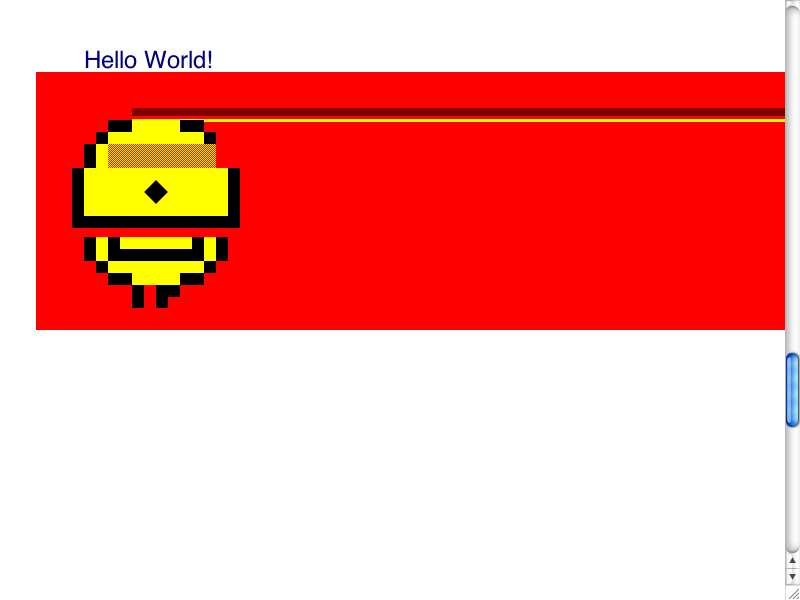
Safari then became the first officially released browser to pass the entire test: version 2.0.2 in October 2005. Firefox, Opera and eventually Internet Explorer followed. Acid2 did not prove that a browser was flawless, but it gave web standards a scoreboard. Browser makers could be seen to win or lose.
Chrome was designed for web applications
When Google released Chrome on 2 September 2008, Gmail, Google Maps and other interactive services were already far heavier than the pages for which older browsers had been designed. Chrome was therefore presented as a new foundation for web applications. Its interface was sparse: tabs at the top, few buttons and one omnibox for both addresses and searches.
Beneath that simplicity was a different architecture. Sites ran in separate processes wherever possible. A frozen page no longer had to take down the entire program, and each process could run in a sandbox. The new V8 engine compiled JavaScript into fast machine code. Speed was no longer measured only by how quickly a page opened, but by what you could do inside it.
Searches and addresses were entered in the same place.
JavaScript gained an engine aimed at complex web applications.
A problem in one tab did not need to crash everything.
New releases reached users without major installation campaigns.
Informative simplification: Chrome used several process models and could share processes.
Chromium was not the same as Chrome
Google simultaneously released the browser's core as the open-source Chromium project. Other developers could study the code, adapt it and use it in their own browsers. Google Chrome was the branded product around that core, with Google services, its own distribution channel and additional components.
Chromium
The shared source code for the browser, Blink and V8. Other makers could build upon it.
Chrome
The consumer browser with Google's name, automatic updates and integrated Google services.
The combination was powerful. Chrome could innovate as a product while its technical basis spread as a platform. The browser was also promoted in places where internet users already encountered Google. The company did not first have to explain what Google was — only why people should try Google's browser as well.
The fight moved into the engine
Google forked WebKit into its own engine, Blink, in 2013. Opera abandoned its independent Presto engine and moved to Chromium. In 2018, even Microsoft announced that Edge would be rebuilt on Chromium. The argument was better compatibility: fewer differences to handle and more websites that worked immediately.
Choice appeared to grow for users: Chrome, Edge, Opera and later browsers such as Brave and Vivaldi each had their own interface and functions. Under the bonnet, many choices increasingly resembled one another. That simplified testing, but it also gave one open-source project — strongly directed by Google — great influence over the Web's direction.
Internet Explorer vanished, but its lesson remained
Microsoft introduced Edge in 2015 as Internet Explorer's successor. The first Edge still had its own engine, EdgeHTML. After the move to Chromium, the new version of Edge appeared in 2020. Support for the Internet Explorer 11 desktop application ended on many versions of Windows 10 on 15 June 2022.
A brand that had won the first browser war thereby reached its end. The question of power did not. In the 1990s, it centred on the browser supplied with the operating system. The second browser war also involved the search engine, web services, mobile phone, update infrastructure and browser engine.