The browser's prehistory
The internet came before the Web
The internet and the World Wide Web are often treated as the same thing, but they are not. The internet is the network over which computers exchange data. The Web is one of the services that uses it. Before the Web took off, people already sent email, retrieved files with FTP, joined discussions on Usenet and used Telnet to work on remote computers.
Each service usually required a separate program. An email client could not open a newsgroup, while an FTP client was not designed for reading an online document. There was no obvious gateway that brought almost everything together.
Find, retrieve and send files through directories on a remote computer.
Read and answer messages in thousands of topic-based newsgroups.
Use text commands to work on a computer located somewhere else.
The dream of connected knowledge
The idea of presenting knowledge in more than a straight line was older than the internet. In 1945, Vannevar Bush described an imaginary device called the Memex in his essay As We May Think. Users would be able to record personal trails between documents. In the 1960s, Ted Nelson gave such connections the name hypertext.
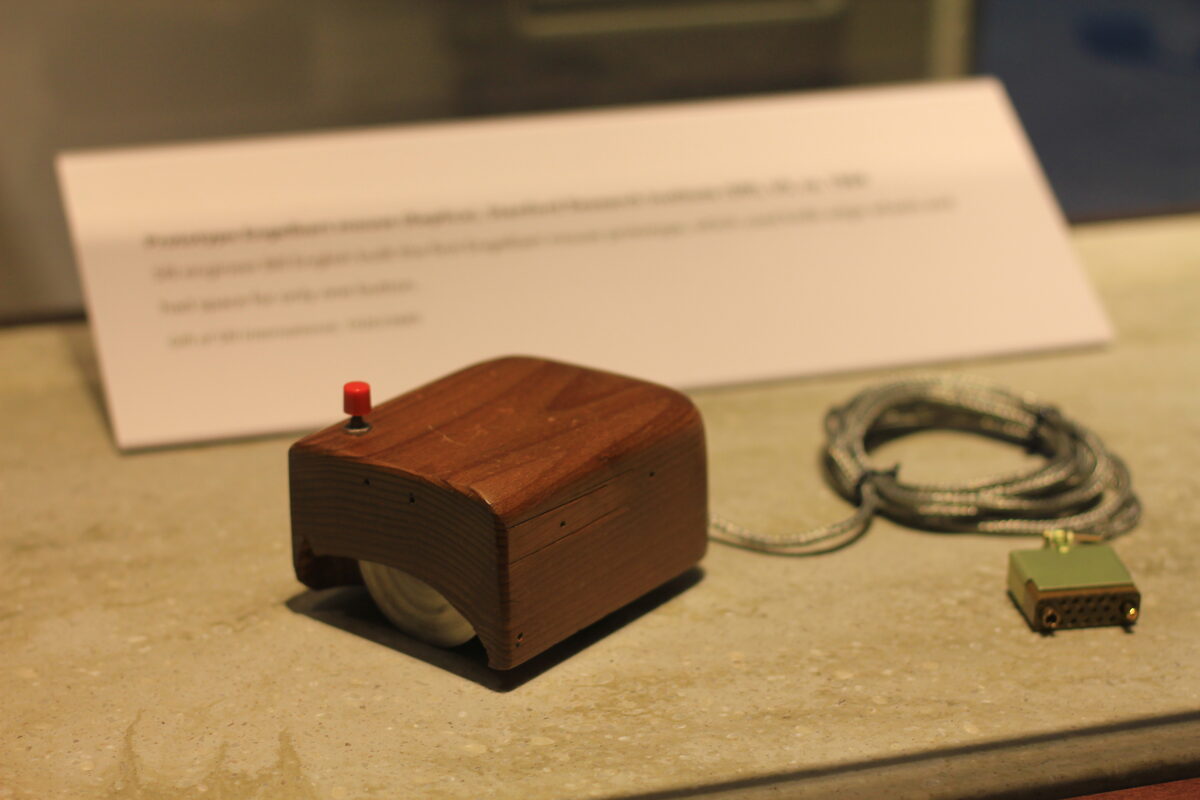
Douglas Engelbart showed how powerful such a system might become. In December 1968, during what later became known as the ‘Mother of All Demos’, his team demonstrated hyperlinks, remote collaboration, windows and a mouse. This was not yet a browser, but it showed that a computer could be more than a calculating machine or electronic typewriter.
From searching to browsing
Hypertext did not merely change the technology; it changed the user's behaviour. In a conventional computer system, you often needed to know the correct command, file address or menu number. In a hypertext system, you could follow a visible reference and decide where to go next along the way.
The English word browse fits that behaviour: looking around, leafing through information and exploring without choosing the final destination in advance. A browser was more than a program for displaying documents. It enabled a new way of reading.
Gopher: the internet as an orderly menu tree
While the Web was still tiny, Gopher looked like a serious candidate for becoming the internet's user-friendly front end. The University of Minnesota released its first version in 1991. Gopher presented information as a tidy series of menus. Choose a topic, open a lower-level directory and continue to a document, search service or another server.
This was far easier than remembering commands and server addresses. Gopher clients could bring references to information on different computers together behind one calm interface. The technical description in RFC 1436 defined a client-server model and a simple protocol for searching and retrieving documents.
Its structure, however, remained strongly hierarchical. An administrator decided which items appeared in a menu and how users travelled down through it. The Web chose a looser model: any document could link directly to any other document. That produced disorder, but also extraordinary freedom.
World Wide Web
[1] What is the World Wide Web?
[2] Help using this browser
[3] People involved in the project
[4] Technical details
> 2_
A new information system emerges at CERN
Thousands of scientists at CERN worked with different computers and documentation systems. In March 1989, Tim Berners-Lee proposed a hypertext system that would connect information about projects, people and equipment. In a more formal version from November 1990, the project was called WorldWideWeb.
The proposal did not depend on one enormous central database. Documents could remain on different computers. Links would reveal the connections between them, while a browser retrieved and presented the documents. This combination of the internet, hypertext, addresses and an open document format became the foundation of the Web.
One browser was not enough
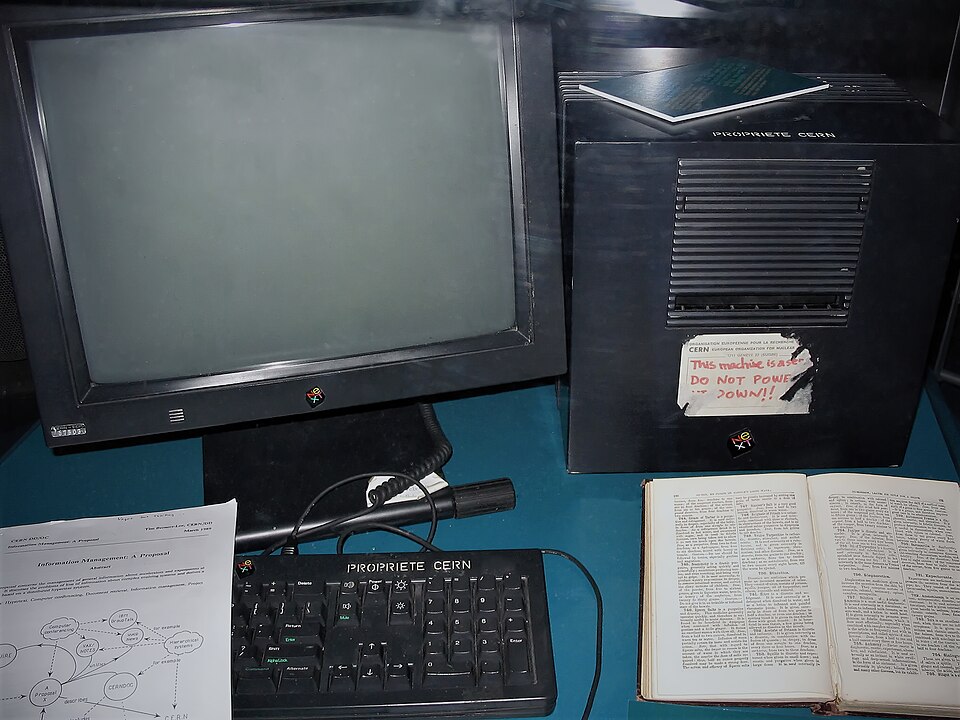
At the end of 1990, Berners-Lee built WorldWideWeb on a NeXT computer. It was a graphical browser and editor, but it only ran on NeXT systems. If the Web was to grow internationally, its information also needed to be accessible from simpler computers and text terminals.
Nicola Pellow therefore developed the Line Mode Browser at CERN. It did not offer handsome windows or images, but it ran on many different kinds of computer. Links received numbers and the user typed the number of the desired destination. That simplicity helped the Web move beyond the small circle of NeXT users.
The Netherlands in this chapter · February 1992
The Netherlands joins in: Nikhef opens the first Dutch website
The early history of the browser was not confined to Geneva or the United States. In Amsterdam, Nikhef — the Dutch National Institute for Subatomic Physics — closely followed the Web's development. Its website became operational on nic.nikhef.nl in February 1992, using the machine that also provided Nikhef's network information. It was the first website in the Netherlands.
The site went online before Mosaic appeared and years before a web browser became commonplace on Dutch PCs. A visitor using the Line Mode Browser saw no logos, photographs or coloured buttons, but a list of numbered links. Typing a number opened information about Nikhef, its research and computer networks.
NIKHEF GUIDE
[1] General information
[2] Research groups
[3] Network information
[4] CERN World Wide Web project
Select: 1_
The austere text browser was precisely what made this Dutch first possible. A graphical NeXT computer was unnecessary: an ordinary terminal with internet access was enough. Nikhef therefore shows how the Web initially spread through universities, research institutes and academic networks, before the general public knew it existed.
Nikhef's historical page preserves both a view of the old site and correspondence with Tim Berners-Lee about the web server. It gives the abstract story of protocols and browsers a specific Dutch location: Amsterdam, February 1992.
View Nikhef's historical web page ↗The browser becomes a universal gateway
The first browsers had no tabs, search box or extension library. Many features we now see as essential would arrive much later. The decisive idea was simpler: one program could open a document and use links to find new documents, even when they lived on other servers.
Users no longer had to know every route and storage location. The browser translated addresses, connections and markup into a readable page. The network did not disappear, but it became less visible.
The next chapter examines WorldWideWeb itself: the first browser, which was designed not only for reading the Web but for writing it as well.